8 Things to Do Before Your Contractor Starts Your Remodel
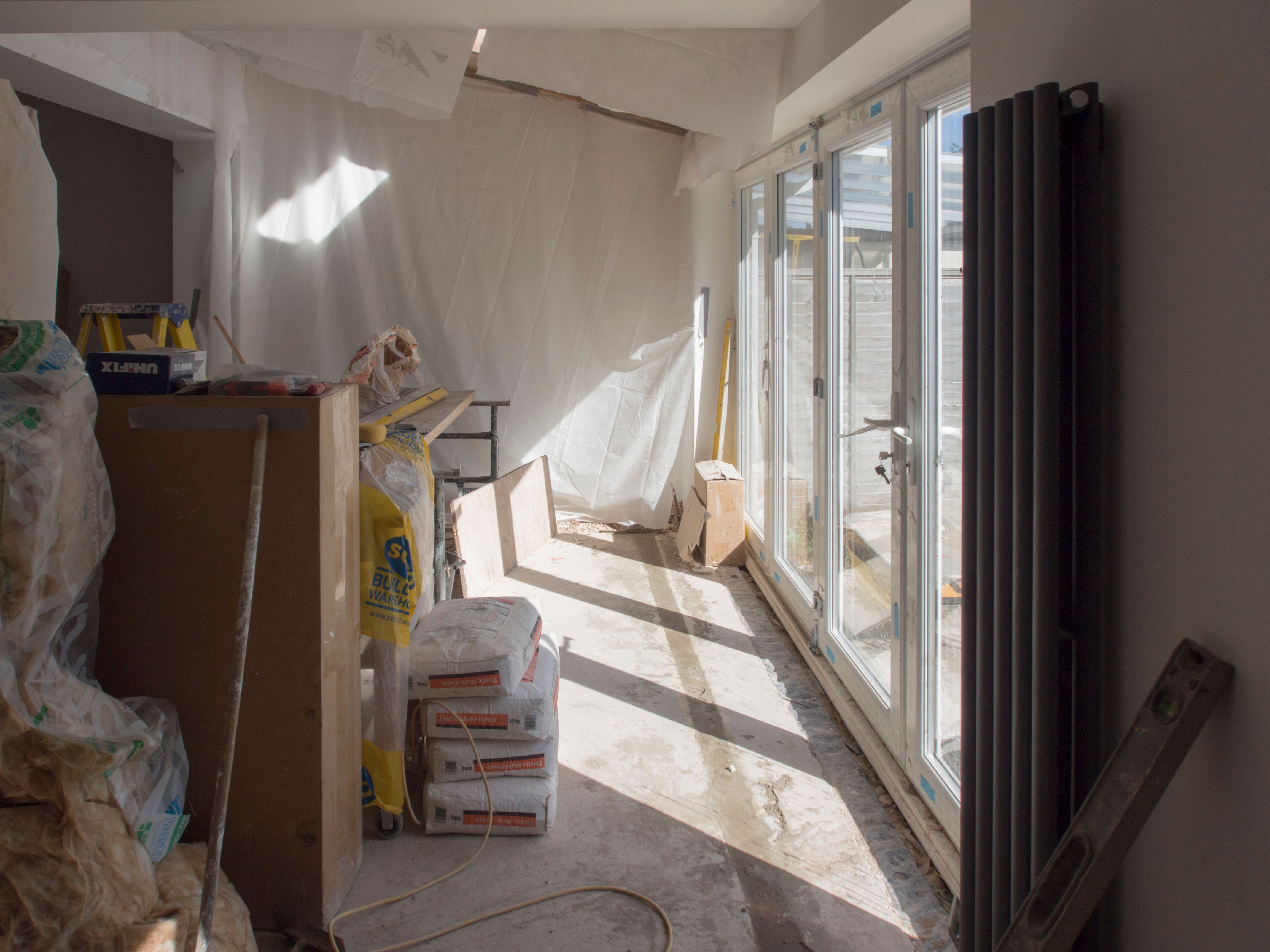
There are a lot of remodeling decisions you know you need to make before construction starts. Cabinets. Flooring. Fixtures. Paint. Appliances. The things you spend months choosing and, in my case, approximately 400 hours second-guessing.
The things I wish I had thought about more were much less exciting.
Where exactly will all the boxes go when materials start arriving? Which parts of the house need to be protected even though nobody is technically working there? Does everyone know where the water shutoff is? And perhaps most importantly, do I have enough photos to prove what my house looked like before a small army of people started carrying tools and building materials through it every day?
I didn't do everything on this list perfectly before my remodel. Some of it I figured out halfway through, usually because a problem had already presented itself.
If I were starting another remodel tomorrow, these are the things I would do before the contractor ever walked through the door.
1. Photograph Everything
This is probably my biggest hindsight item.
Before construction starts, walk through your house with your phone and photograph everything. And I mean everything, not just the rooms being remodeled.
Take wide shots of each room, then get closer photos of floors, walls, baseboards, doors, countertops, appliances, cabinetry and anything else that could conceivably be scratched, dented, chipped or damaged.
Photograph the path workers will use to enter and leave the house. Photograph stairs. Photograph hallways. Photograph exterior areas where materials might be carried or stored.
I wish I had done this much more systematically.
During a long remodel, there are inevitably moments when you notice a scratch or mark and genuinely cannot remember whether it was there before construction started. Maybe it was. Maybe it wasn't. Without a photo, you're relying on everyone's memory, including your own.
You don't need a professional inspection or elaborate documentation system. A five-minute video walkthrough plus a folder of photos on your phone is infinitely better than nothing.
Create an album called Before Remodel and put everything in it.
Hopefully you never need it.
2. Document Existing Damage Separately
While you're photographing the house, take close-ups of anything that is already damaged.
Scratches in wood floors. Chips in tile. Dings in appliances. Cracks in walls. Marks on doors. Anything fragile or imperfect that someone might reasonably think happened during construction.
This protects everyone.
If something was already damaged, you don't want to incorrectly blame your contractor for it. And if something genuinely gets damaged during construction, you don't want to spend three weeks debating whether it was there before.
The goal isn't to start the project assuming there will be a dispute. It's exactly the opposite. Good documentation prevents minor questions from turning into unnecessary arguments later.
3. Know Exactly Where Your Water Shutoff Is
You probably know approximately where your water shutoff is.
That's not good enough during construction.
Know exactly where it is, make sure it's accessible, and make sure the people working in your house know where it is too.
Remodeling means plumbing gets disconnected, moved, capped, reconnected and tested. Even if you're not doing a major plumbing renovation, there may be temporary sinks, appliances, toilets, refrigerator lines or other connections involved.
I have become borderline obsessive about water because a relatively small leak can cause an incredible amount of damage when nobody notices it quickly.
I also keep Govee water leak detectors anywhere water is connected, including under sinks, behind appliances and near the water heater. During a remodel, when plumbing is actively being changed and people are moving things around, I think they become even more useful.
Knowing how to shut off the water is step one.
Knowing there's a leak before it becomes a disaster is step two.
4. Figure Out Your Electrical Situation Before You Need It
You don't need to become an electrician. You do need to know where your electrical panel is and have some idea which breakers control which areas of the house.
If your panel labeling consists of things like:
LIGHTS
OUTLETS
MAYBE KITCHEN??
this is an excellent time to improve it.
Construction already creates enough confusion without discovering that nobody knows which breaker controls the refrigerator you're temporarily running from a different room.
This matters even more if you're going to continue living in the house during the remodel.
Think through what absolutely needs uninterrupted power. Your refrigerator. Internet. Temporary cooking appliances. Work setup. Security equipment. Anything else you rely on every day.
A remodel has a funny way of turning completely ordinary household infrastructure into a complicated logistical exercise.
5. Move Anything You Actually Care About
Do not assume that because contractors are working in the kitchen, the vase in the hallway is safe.
Construction spreads.
Workers walk through rooms that aren't technically under construction. Materials get leaned against walls. Doors stay open. Tools get carried upstairs. Dust migrates into places that seem physically impossible.
Before work starts, remove anything fragile, sentimental or expensive from the construction zone and from the routes people will regularly use to get there.
I would be especially aggressive about this with artwork, small furniture, decorative objects, electronics and anything irreplaceable.
You can put everything back later.
For a few months, boring and empty is better than discovering someone accidentally knocked over something you loved while carrying a sheet of drywall.
6. Decide What Needs to Be Protected
There will probably be parts of your home that are staying exactly as they are.
Those things still need protection.
Floors are the obvious example. If workers are repeatedly walking across finished flooring, decide before construction begins how it will be covered and who is responsible for maintaining that protection.
The same applies to stairs, railings, doors, countertops, furniture and anything else that has to survive the project.
And don't assume that because something was protected on day one, it will remain protected on day 67. Floor paper shifts. Tape comes loose. Dust gets underneath coverings. People move things and don't always put them back.
Cleaning during construction can feel completely pointless because everything gets dirty again approximately twelve minutes later. I still think it's worth doing.
I wrote more about the things that genuinely helped me live through construction in What I Bought During My Remodel That Was Actually Worth It, including what I used for dust, cleaning, temporary cooking and monitoring the house for problems.
7. Decide Where Deliveries Are Going to Go
This sounds ridiculously minor until six large boxes arrive two weeks earlier than expected and nobody has any idea where to put them.
Before construction starts, designate a staging area.
Where can appliances go?
Where will tile be stored?
What about plumbing fixtures, lighting, hardware and boxes you need to inspect but aren't ready to install?
Can anything safely stay in the garage? Does something need to remain indoors? Is there a path through the house that can't become blocked?
You will probably accumulate more stuff than you expect.
And if you're ordering materials yourself, open the boxes when they arrive. Make sure you received the right item, in the right finish, in the right quantity, and that nothing arrived damaged.
Discovering the wrong faucet when the plumber is standing in your kitchen is significantly less fun than discovering it three weeks earlier.
8. Put Everyone's Contact Information in One Place
At the beginning of a remodel, you may only communicate with your general contractor.
Then suddenly there are electricians, plumbers, cabinet people, painters, appliance installers, suppliers and delivery companies involved.
Create one note on your phone with the important names and numbers.
At minimum, keep:
Your contractor's name and number
Project manager or superintendent
Electrician
Plumber
Cabinet contact
Appliance contact
Major suppliers
Any relevant order numbers
Insurance information
Neighbor contact information if construction could affect them
You may never need half of it.
That's fine.
The point is that when something happens at 7:15 on a Tuesday morning, you aren't searching through six months of text messages trying to remember the plumber's first name.
One More Thing: Photograph Everything Again at the Rough Stage
OK, OK. I know this isn't technically something to do before your remodel starts, but it's too important not to include here.
When your project reaches the rough stage and the walls are still open, photograph everything again.
Take pictures of every wall before the drywall goes up. Photograph plumbing lines, electrical wiring, junction boxes, outlets, HVAC ducts, blocking, studs and anything else that is about to disappear behind a finished wall.
Don't just take a few general photos. Stand back and photograph the entire wall so you'll have context later, then take closer photos of anything you may actually need to locate.
Future you may want to hang something heavy, add an outlet, troubleshoot plumbing, move a fixture or figure out what is running through a particular wall. Being able to pull up a photo and literally see what's behind the drywall is incredibly useful.
Create another album on your phone called Rough Stage.
You may not need those photos for years. That's exactly why you should take them now.
Once the drywall goes up, you don't get another chance.
One More Thing: Decide How You're Going to Live
If you're staying in the house during construction, don't treat the temporary setup as an afterthought.
Where are you going to make coffee? Where will you wash dishes? Where will the refrigerator go? What can you realistically cook? Where can you retreat when the construction area feels completely chaotic?
This matters more than I expected.
There is a big difference between technically being able to live in your house and having one part of it that still feels functional and peaceful.
A kettle, microwave, air fryer and mini-fridge aren't glamorous remodel purchases, but they may matter more to your day-to-day sanity than half the things you've spent hours choosing for the finished kitchen.
And the mental side of living through construction is real. I wrote an entire piece about why remodels make smart people feel insane, because the stress isn't just the dust or the money. It's the constant stream of decisions, interruptions, uncertainty and tiny problems that somehow all need your attention.
Anything you can organize before demolition starts is one less decision you'll have to make when your house is already upside down.
The Thing I Would Do Differently
If I could go back to the day before my remodel started, I would take my phone and spend 30 minutes documenting the entire house.
Not pretty before photos.
Evidence.
I would photograph every floor, wall, doorway, appliance and finished surface anywhere near the construction path. Then I'd put the photos in one folder and probably never look at them again.
That would be ideal.
Because the best remodel preparation isn't about anticipating every possible thing that can go wrong. You can't.
It's about handling a handful of boring details beforehand so that when something inevitably does happen, you're not starting from zero.
Take the pictures. Find the shutoff. Protect the floors. Move the things you love.
Then let them start.
Ashley Hendrix
Writer, product strategist, and founder of North & Common. She writes about wellness, home, money, and modern adulthood with an emphasis on emotional realism over perfection.